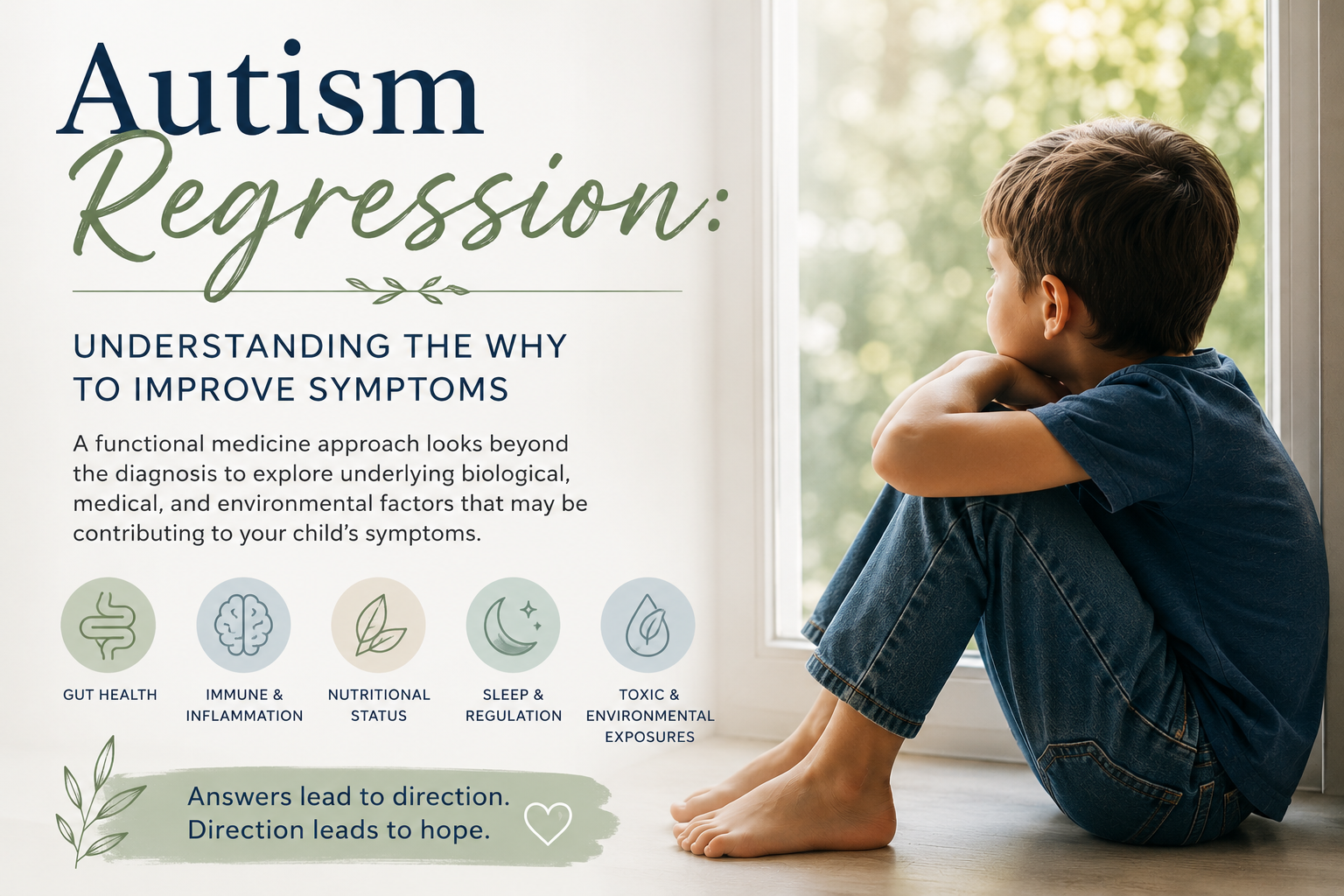
Autism Regression: Understanding the Why to Improve Symptoms
For many families, autism regression is one of the most confusing and difficult parts of their child’s story. A child may have been developing typically and then begin losing previously acquired skills—language, eye contact, social engagement, play skills, or other abilities.
When regression occurs, an important question deserves to be asked:
Why?
Rather than viewing regression only as part of an autism diagnosis, a functional medicine approach asks whether there may be underlying biological or medical factors contributing to the child’s symptoms.
What Is Autism Regression?
Autism regression generally refers to the loss of skills that a child previously had. Parents may notice changes such as:
- Loss of words or previously used language
- Decreased eye contact
- Less social interaction or engagement
- Loss of play or communication skills
- Changes in behavior or emotional regulation
- Changes in sleep, digestion, eating, or overall health occurring around the same time
Every child’s experience is different, which is why looking carefully at the child’s individual history can be so important.
Looking Beyond the Diagnosis
An autism diagnosis describes a collection of behaviors and developmental differences. It does not necessarily explain why those changes occurred.
A systems biology or functional medicine approach looks at the child as a whole and considers how different systems in the body may be interacting.
Depending on the child’s history and symptoms, areas worth discussing with qualified healthcare providers may include:
- Gastrointestinal health and the microbiome
- Nutritional status and deficiencies
- Immune function and inflammation
- Mitochondrial and metabolic function
- Sleep
- Environmental exposures
- Infections and immune triggers
- Oxidative stress
- Genetics and individual biochemical differences
The goal is not to assume that any one of these factors caused a child’s autism or regression. It is to recognize that co-occurring medical concerns deserve to be identified and appropriately addressed.
Why Understanding Regression Matters
Understanding what was happening medically and biologically around the time of regression may provide important clues about a child’s current health.
Was there a significant change in gastrointestinal function? Sleep? Eating? Behavior? Immune health? Were there illnesses, medications, environmental changes, or other events around the same period?
Looking at the timeline can help families and their healthcare team identify areas that may warrant further evaluation.
This matters because symptoms that occur alongside autism should not automatically be dismissed as simply being “part of autism.”
A child experiencing constipation, chronic diarrhea, disrupted sleep, nutritional deficiencies, gastrointestinal discomfort, or another medical problem deserves appropriate evaluation and care—regardless of an autism diagnosis.
Can Addressing Underlying Issues Improve Symptoms?
There is no single intervention that applies to every autistic child, and autism regression can have many potential contributors.
However, identifying and appropriately addressing a child’s individual medical and nutritional needs may improve their health and, in some cases, positively affect areas such as sleep, digestion, comfort, behavior, regulation, attention, and overall function.
This is why individualized care matters.
The question becomes less about finding one universal “autism treatment” and more about asking:
What does this particular child need?
Start With the Child’s Story
One of the most valuable places to begin is often the child’s timeline.
When did development begin to change? What was happening before, during, and after the regression? Were there changes in digestion, sleep, diet, illnesses, medications, environment, or behavior?
From there, families can work with knowledgeable healthcare professionals to determine whether additional medical evaluation, nutritional assessment, or functional testing may be appropriate.
Asking Better Questions
Families who have witnessed autism regression deserve more than an acknowledgment that regression occurred. They deserve continued research into why it happens, what biological mechanisms may be involved, and whether identifying those mechanisms can lead to better support and better outcomes.
Understanding the why is not about assigning blame.
It is about asking better questions.
And better questions can help us identify meaningful opportunities to support a child’s health, function, and quality of life.