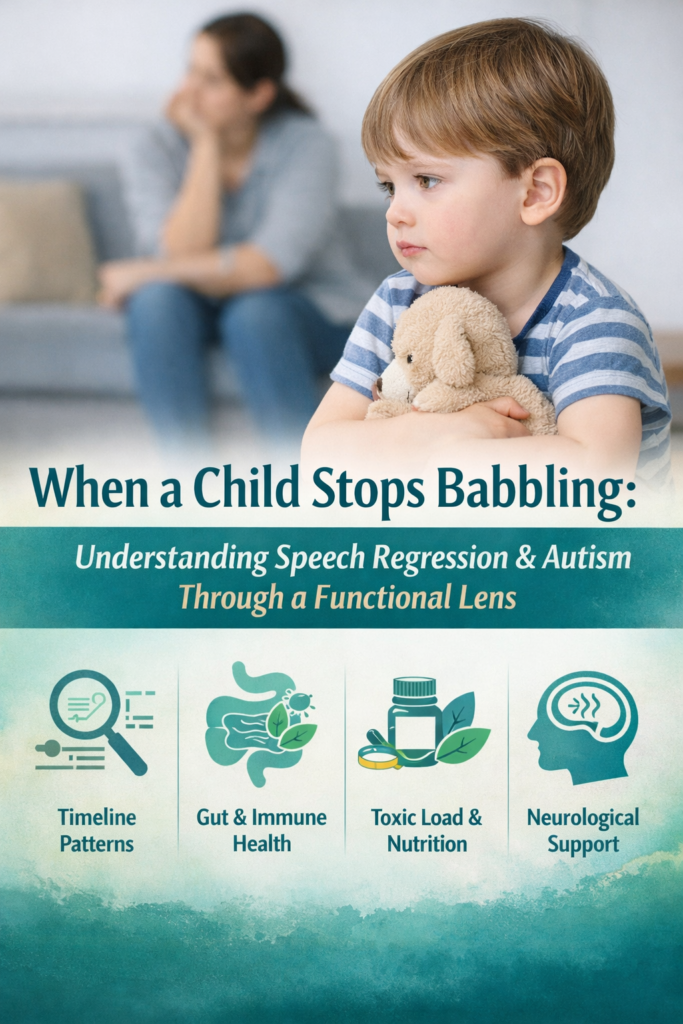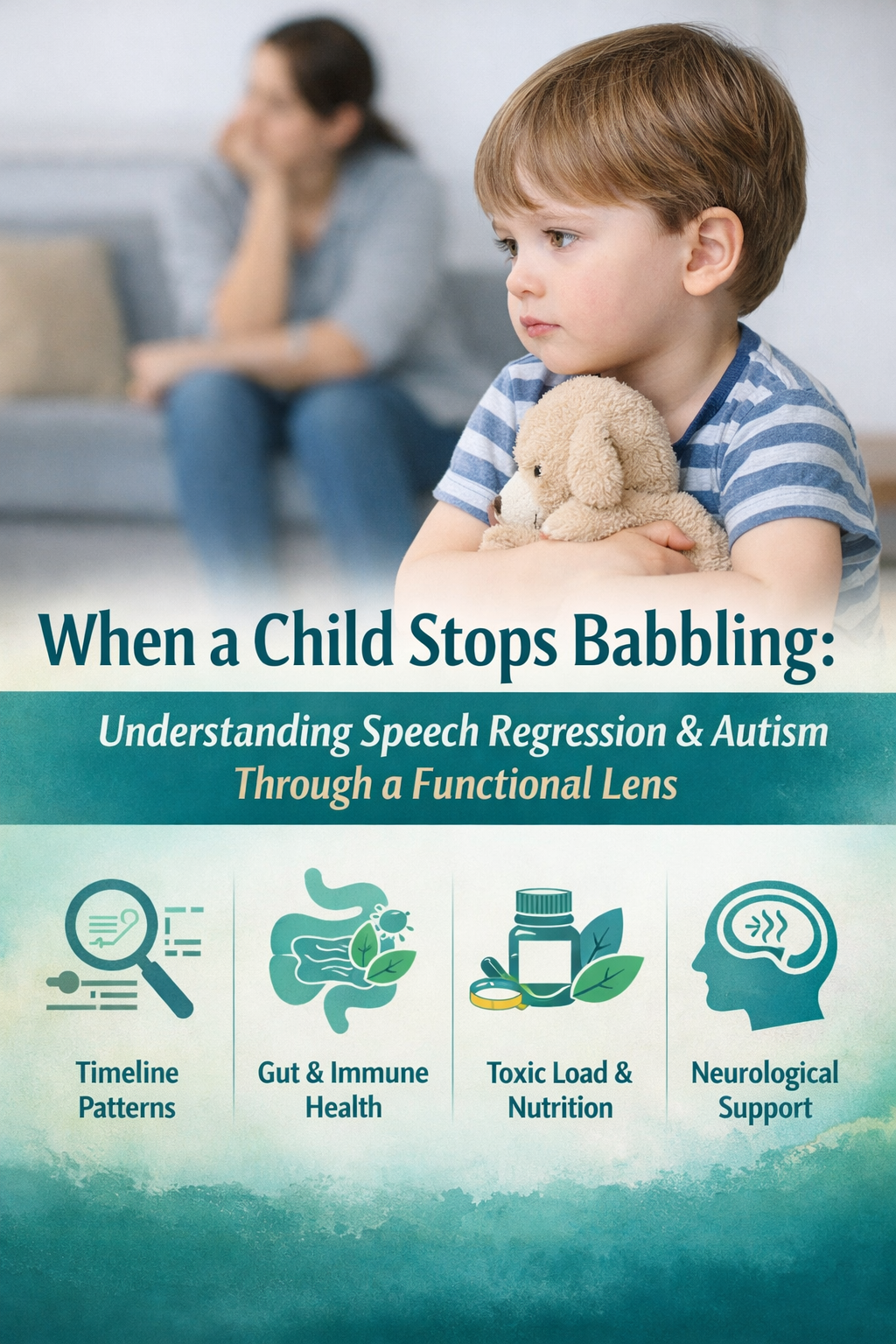
Sometimes the change is obvious. Other times, it unfolds gradually.
A child who was babbling becomes quieter. A word that once came easily is no longer used. Sounds become less frequent. Engagement shifts.
Speech regression does not always appear dramatic. It can be subtle, inconsistent, or easy to second-guess in the beginning.
For many families, recognition comes later — when they look back and realize something changed.
What Speech Regression Can Look Like
Speech regression may include:
- Loss of previously used words
- Reduced babbling or vocal play
- Fewer spontaneous sounds
- Words used less consistently
- Changes in social engagement
- Increased frustration or difficulty communicating
Not every child who experiences language changes meets criteria for autism, and not every autistic child experiences regression. However, when speech skills decline or stall after a period of progress, it naturally raises important questions.
The Turning Point: Therapies, Diagnosis, and Questions About Timing
For many families, services begin after this period of regression.
Speech therapy may be initiated. Early intervention services are put in place. Developmental evaluations are scheduled. Often, around age three or four, a formal diagnosis is given.
It is during this stage that many parents begin looking beyond developmental descriptions and start asking a deeper question:
What happened?
Families often retrace the timeline in an effort to understand when the shift occurred.
For many, this question opens a deeper process of reflection. I explore this broader pattern-recognition approach in my article, “What Happened? Exploring Regression Through a Functional Lens”, where I discuss how families begin connecting developmental shifts with earlier events.
Parents may revisit illnesses and infections, recall rounds of antibiotics, and think about environmental changes such as moves, renovations, water damage, or new childcare settings. They may consider dietary changes, stressors, or medical interventions. Some also reflect on routine vaccination appointments that occurred near the time they first noticed differences.
From a functional perspective, exploring timing is not about identifying a single cause. It is about recognizing patterns — particularly when multiple physiological stressors may have occurred within a relatively short window.
The goal is not blame. The goal is context.
Why the Timeline Often Becomes Clear Later
In real time, changes can be difficult to recognize.
A child may seem quieter for a period and it may be interpreted as a phase. A teacher may later comment on reduced participation. A pediatrician may ask whether words were previously present.
Often, it is only after therapies begin or a diagnosis is given that parents feel urgency to reconstruct the sequence of events.
A functional approach views timing through the lens of pattern recognition, especially when stressors may have accumulated.
Children live within a complex physiological and environmental landscape that can include:
- Illness and immune activation
- Medication exposure
- Dietary influences
- Environmental toxins such as mold, pesticides, heavy metals, and air pollution
- Emotional and physiological stress
- Routine medical exposures
In some cases, regression appears to follow a distinct event. In others, it reflects cumulative load over time.
A Functional Perspective on Speech Changes
Speech and language development rely on coordinated function between multiple systems, including the brain, immune system, gut, nutrient availability, sensory processing pathways, and motor planning networks.
When regression occurs, a functional approach considers whether underlying physiological stressors may be affecting regulation or contributing to neuroinflammation.
This does not assume a single explanation. Instead, it invites careful questions:
- Is the immune system persistently activated?
- Are there signs of gut inflammation?
- Could nutrient imbalances be influencing neurological function?
- Has cumulative toxic load increased?
- Are detoxification pathways adequately supported?
- Did something shift physiologically before communication changes became noticeable?
In some cases, reviewing history alongside selective functional assessments — such as urine or stool analysis — can provide additional context. I discuss this more fully in my article on functional labs and understanding symptoms in children, including how these tools help clarify patterns beneath the surface.
These assessments are not answers in isolation. They are tools for understanding how the body is processing nutrients, regulating immune responses, supporting digestion, and eliminating environmental burdens.
Speech Regression Is Complex — But There Is Room for Hope
Regression rarely has a simple explanation.
For some children, it follows illness. For others, it appears gradually and is difficult to trace. In many situations, infectious, environmental, nutritional, and inflammatory stressors may interact in ways that affect regulation and development.
While no approach can guarantee a specific outcome, early and thoughtful support can make a meaningful difference. When underlying infections, inflammation, nutrient imbalances, or environmental burdens are identified and addressed, some children do experience progress — particularly when intervention occurs closer to the time of regression and during earlier developmental windows.
A functional approach offers a structured framework for exploration and support. Rather than focusing solely on the loss of words, it considers what may be influencing a child’s overall regulatory capacity — and whether reducing inflammatory burden, supporting immune balance and detoxification pathways, improving digestion, optimizing nutrient status, or minimizing environmental stressors may help create a more supportive physiological environment for communication.
Progress is not always linear, but supportive physiological changes can create space for healing and development to unfold.
Moving Forward Thoughtfully
If you have noticed changes in your child’s speech — whether recent or years in the past — you are not alone in wanting clarity.
Organizing the timeline, gathering context, and looking beneath the surface can help shift the focus from “Why did this happen?” to “What can we support now?”
Often, the first step is identifying patterns that may not have been obvious before.
If you are trying to make sense of changes in your child’s speech and would like support organizing the timeline and next steps, a complimentary 20-minute discovery call is available. It’s an opportunity to ask questions and explore whether a functional medicine–informed approach may be supportive for your family.