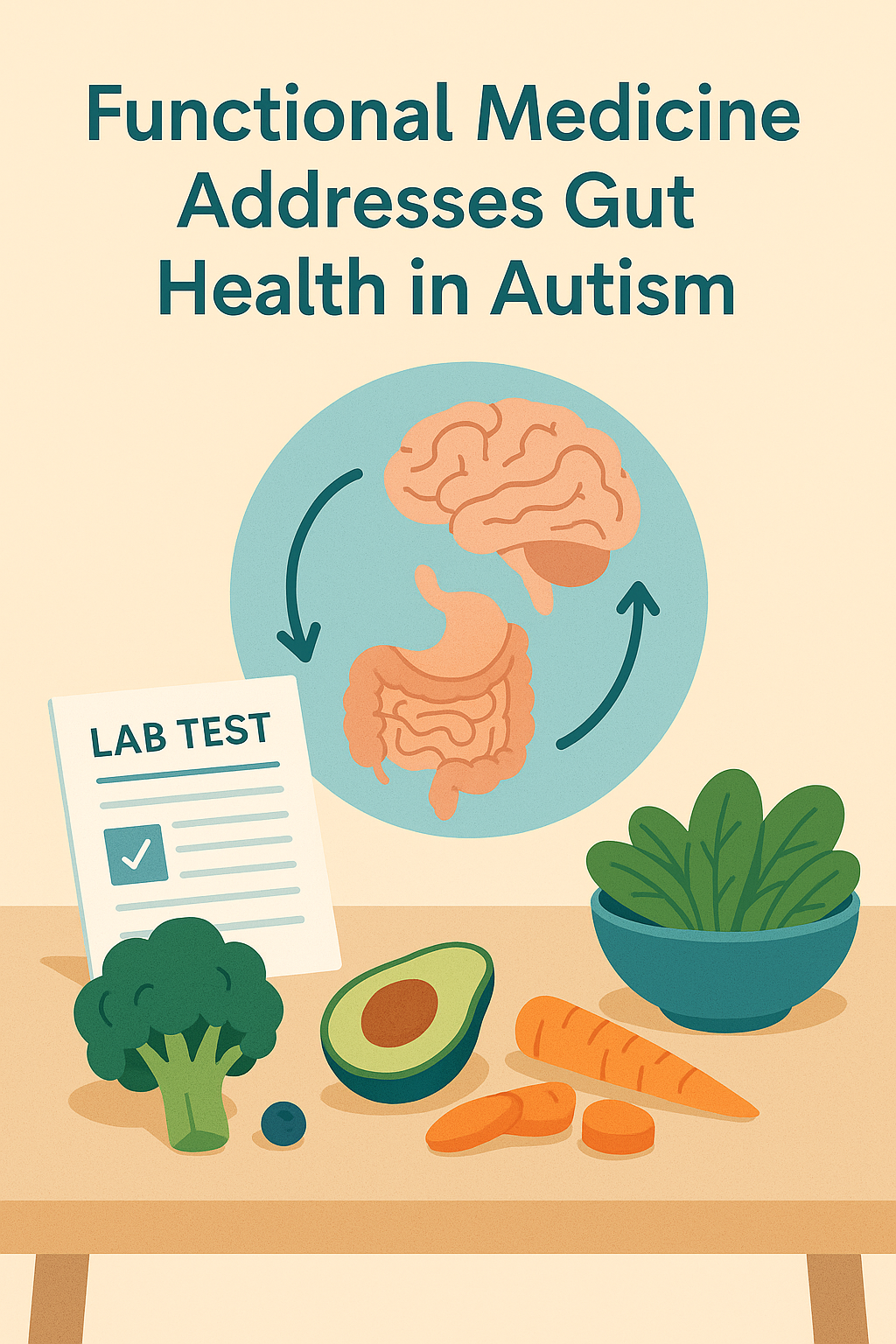
Parents often recognize when their child’s symptoms are connected to something beneath the surface—especially when it comes to digestion, picky eating, or changes in behavior after consuming certain foods. In functional medicine, these clues are never ignored. The gut plays a central role in how the brain functions, how inflammation is regulated, and how a child feels day to day.
By understanding the gut–brain connection, we can begin to uncover why certain symptoms appear and take small, practical steps toward balance and healing.
The Gut–Brain Connection and the Role of the Vagus Nerve
The vagus nerve acts as the main communication pathway between the gut and the brain. It sends signals back and forth, constantly updating each system on how the other is doing.
When digestion is impaired or the gut microbiome is imbalanced, inflammatory signals travel along this nerve and can influence mood, energy, and cognition. In the case of autism, this sometimes means worsening irritability, brain fog, fatigue, increased stimming, aggressive behaviors, or even eloping.
Likewise, when the body or mind is under stress, vagal tone (the strength of this communication) weakens. This can lead to slower digestion, increased inflammation, and shifts in gut bacteria—all of which can make a child feel more dysregulated or uncomfortable in their own body.
In my practice, I see how calming the nervous system and supporting digestion often go hand in hand. When we reduce inflammation in the gut, the vagus nerve can send clearer, calmer messages to the brain. This shift often brings noticeable improvements in mood, focus, and overall function.
Common Signs of Gut Imbalance
- Picky eating and limited food acceptance
- Constipation, diarrhea, or alternating patterns
- Abdominal pain, bloating, or gas
- Irritability or discomfort after meals
- Fatigue, poor sleep, or “foggy” behavior
- Food cravings, especially for carbohydrates or dairy
Some of these patterns have been present for so long that they start to feel “normal” to the whole family—even though they may be quietly impacting a child’s comfort, focus, and development.
My Approach to Gut Healing
In my work with families, I look closely at patterns that might be contributing to ongoing imbalance. For many children, food sensitivities—not the same as food allergies—are part of the picture.
Allergies typically trigger an immediate immune reaction. Sensitivities, on the other hand, can create a delayed response—sometimes hours or even days later—showing up as irritability, fatigue, anxiety, congestion, digestive discomfort, changes in mood or focus, skin rashes, and occasionally respiratory symptoms.
Some children have had digestive symptoms for as long as their parents can remember—so much so that what’s “normal” in the household may actually be a sign of imbalance.
Along with exploring food sensitivities, I often look at whether bacterial or fungal overgrowth might be creating an environment in the gut that’s not favorable to a healthy microbiome. These patterns are explored through functional testing:
- A comprehensive stool analysis helps identify bacterial imbalances and evaluates overall microbiome health.
- An organic acids test can reveal signs of yeast or fungal overgrowth.
A thorough stool analysis is especially valuable, as it gives us a clearer understanding of whether dysbiosis may be contributing to behavioral, cognitive, or neurodevelopmental symptoms.
These microbial imbalances are addressed through dietary changes, botanical remedies, and, at times, pharmaceuticals. We use the lab results to make diet and environmental adjustments and then collaborate with a functional medicine doctor for more involved interventions or anything involving medication. It’s especially important to be under the care of the right practitioner—and I help families find one who best fits their needs and collaborate closely with them so the plan is clear, manageable, and aligned.
Moving Forward
As we work through digestion, sensitivities, and any imbalances in the microbiome, parents begin to understand what’s been contributing to their child’s symptoms and what can help things improve.
Every child is different. By supporting gut health through shifts in nutrition and guidance based on lab results, we can begin to gently nudge the body back toward homeostasis. I use labs as an educational tool—helping families see what may be driving symptoms and how to make meaningful, step-by-step changes based on those findings.
Depending on what the labs reveal, the plan may include dietary changes, botanical remedies, or—when appropriate—pharmaceutical agents to help eliminate unfavorable microbes. When medication or more advanced interventions are needed, I help families find the right functional medicine doctor and collaborate with them so everything feels coordinated, thoughtful, and manageable in daily life.
If you’re ready to explore this work for your child, you can learn more on the
Work With Me page or start with a free discovery call to see whether this approach feels like the right fit.